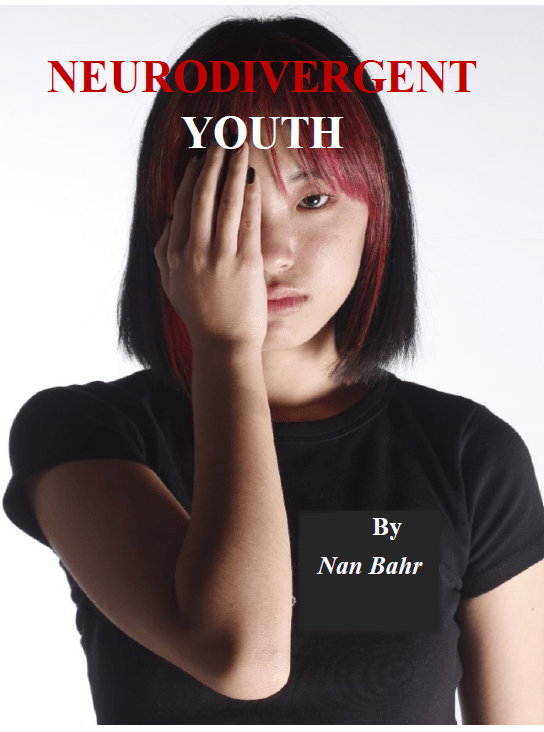
I’ve been working with young people who fit a description as being neurodivergent for my entire career as an educationalist. I’m fascinated by the drive to diagnose, label and stereotype adolescents who do not properly fit in as being “typical”. I’m not saying that diagnosis isn’t helpful. A careful and respectful process of identifying the specificities of the challenges a young person experiences can assist their support teams with devising treatments, management programs, designing reasonable educational adjustments and so forth. My concern is that a child can become their label, and instead of being the star of their own existence, they can become victims of the limited vision that can attach itself to a named diagnosis. I also wish to acknowledge the intersectionality of cognitive, social, emotional, and physical diversity and the nature of many neurodivergent conditions as spectrum disorders. I think we owe it to the youth in our circles to understand what a diagnosis might mean for them. We need to carefully consider the nature of the challenges faced by each individual youth. But we also need to hold onto some basic positive principles that lead positive development for all youth.
My strong view is that it generally doesn’t matter anyway … for all but the most profound of difficulties, there are some basic principles for working with youth that ensure the best possible outcomes regardless of their status as neurotypical or neurodivergent, with or without ascertainment and diagnoses. It seems that strategies for being responsive to neurodivergence are also really helpful in working with the otherwise neurotypical youth.
My perspective is informed by the work of Geidd, Dweck, Stegman, Bronfenbrenner, Vygotsky and neo-Vygotskyian research that focuses our attention on the potency of interpersonal interaction and purposefully designed systems that form our individual and socially ecological contexts for learning. I could go on … well, I did go on…
To support positive engagement with youth I have written a short book targeting parents, education and allied health professionals… anyone with an interest in supporting youth. It is a kind of overview and guide book resource and definitely not a ground breaking high level academic work. It is meant to be useful, handy, with simple and straightforward explanations, illustrations and strategies. It has been published in house by Balance Foundation Ltd. (a not for profit company that I personally co-direct).
We are a not-for-profit charitable company that provides inclusive community based martial arts training with particular success for neurodivergent youth. Consider supporting our work by purchasing a hard copy of the book. Hard copies can be ordered by email to nan.bahr@hotmail.com ($20 AUD RRP). However feel free to download and reproduce from the soft copy attached to this blog at no cost. You might like to make a donation via our site www.balancetkd.com.au
 Promoting Teacher Education
Leave a comment